BLOG
More AI alerts won't make energy operations safer.

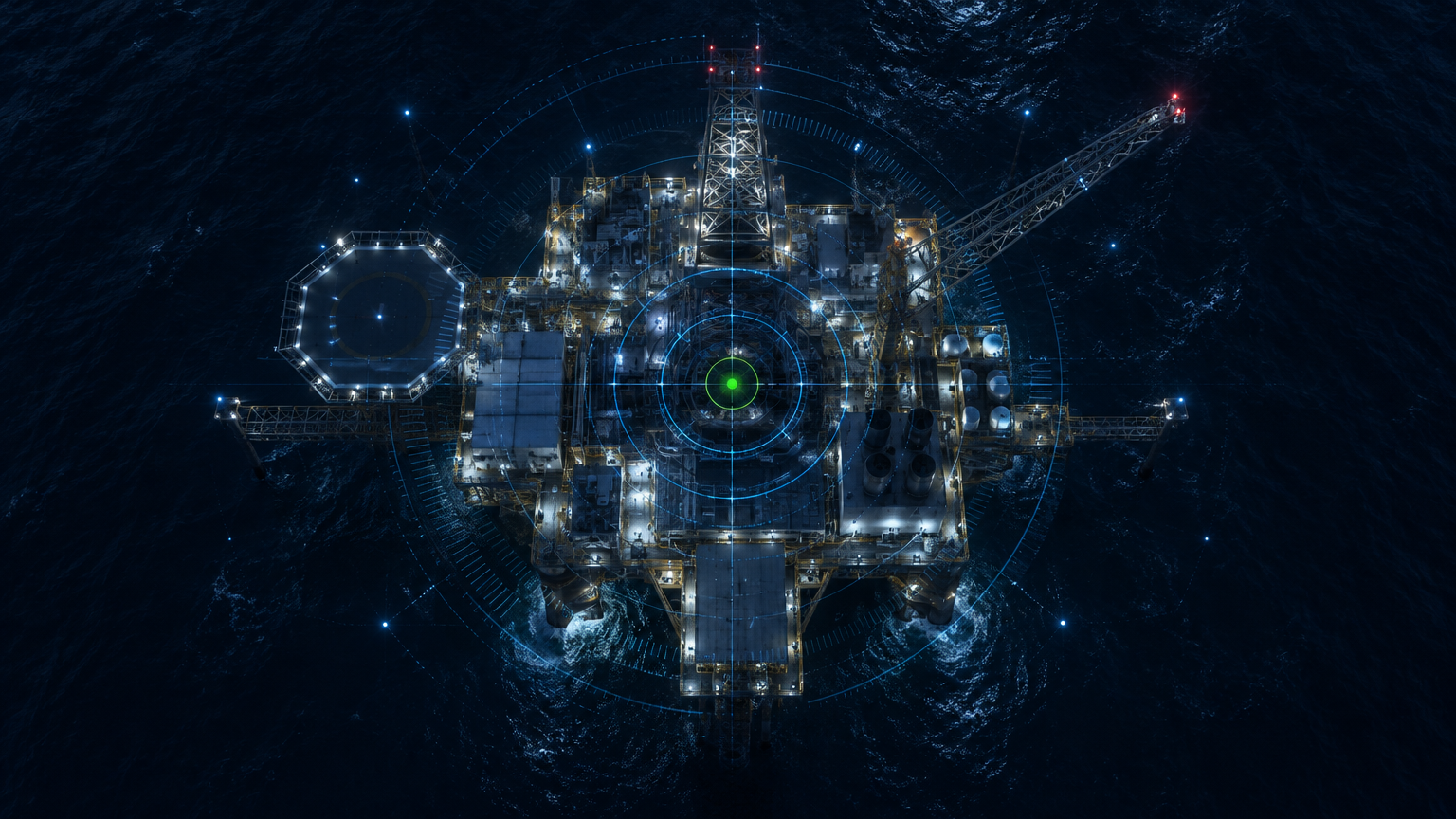
Ask an energy operator what AI should do for safety and reliability, and the answer is usually some version of "see problems sooner." Detect corrosion earlier. Spot the pressure anomaly before it escalates. Flag the failing pump before it trips the unit.
AI is very good at this. It can watch thousands of sensors without getting tired and flag patterns no person would catch. But detection was never the whole problem. A signal only makes an operation safer if it reaches the right person, in time, with enough context to act. Most AI programs in energy are investing in the first half of that sentence and assuming the second half will take care of itself.
It won't. And the industry has already learned what happens when signals outrun the people meant to act on them.
Detection is getting cheap. Attention isn't. Every AI model that flags a risk competes for the same operators' focus.
Too many signals can be as dangerous as too few. Alarm overload has contributed to major process safety incidents.
An alert is only as good as the decision it reaches. The value comes from routing, priority and context, not detection alone.
Design the decision path before you add the detector. Measure response, not alert volume.
Every new AI use case in an energy operation tends to produce the same output: another alert. A corrosion model flags a pipe segment. A vibration model flags a compressor. A demand forecast flags a capacity risk. Each one is useful on its own. Together, they land on the same small group of control room operators, maintenance planners and HSE leads.
Those people already work inside a crowded stream of alarms, work orders and messages. Adding AI detection without redesigning that stream doesn't add safety. It adds noise, and noise has a cost that rarely shows up in an AI business case.
On 24 July 1994, an explosion and fires at the Texaco refinery in Milford Haven, Wales, injured 26 people and shut the refinery for weeks. The direct cause was a combination of equipment, control system and management failures during a plant upset. One of the factors the UK Health and Safety Executive called out is directly relevant to AI today. It found that the excessive number of alarms in the emergency reduced the effectiveness of the operators' response, and that the control displays didn't give them the overview they needed.
The IChemE incident summary lists "too many alarms, poorly prioritised" among the root causes. The operators were not short of information. They were buried in it.
Alarm management practice has improved a great deal since then. But AI risks undoing some of that progress if every new model is allowed to raise its own flags into the same control room.
The strongest AI results in energy come from programs that redesigned what happens after the detection, not just the detection itself.
A global oil and gas company operating more than 150,000 miles of pipeline came to us with an inspection cycle of roughly once every four months, and anomalies that took one to three days to validate. Our AI-powered integrity system combined sensor telemetry, drone imagery and predictive models. Anomaly detection dropped from one to three days to under five minutes.
The speed is impressive, but it is not why annual operational costs fell 22%. That came from what the speed was connected to. Alerts went straight to the operational teams responsible for responding. Predictive models ranked assets by risk, so crews worked on what mattered most. Maintenance moved from a fixed calendar to the actual condition of each asset. The detection was the trigger. The redesigned decision path was the result.
For every AI signal in an energy operation, there should be a clear answer to four questions before it goes live. Who owns the response? How quickly must they act? What context do they need in front of them to decide? And which existing alarms or reports does this replace?
That last question matters most. If a new AI alert only ever adds to the stream, the stream will eventually overwhelm the people reading it. In an AI-native operation, agents do more than detect. They group related signals, filter out the ones that don't need a person, assemble the context for the ones that do, and route each to a named owner based on risk. People stay in control of the decisions. They just stop being the filter.
This is the approach behind our AI-Native Operating Model. A small pod of your engineers, our specialists and AI agents starts with one high-consequence decision, such as which pipeline segment gets inspected next, and redesigns the workflow around it. Through Automate30, that workflow becomes a working, governed solution in 30 days. Every agent runs in AAxon, where its rules, owner and actions are visible and traceable.
The same principle shows up across our energy work. For a multinational oil and gas company, AI-enabled preventive maintenance delivered 60% cost optimization and a 70% reduction in effort.
When our AI raises an alert, who acts on it, and how fast? If the answer is "whoever sees it," the alert is adding risk, not removing it.
What did we switch off when we switched AI on? If nothing, your operators' load only went one direction.
Are we measuring alerts raised, or decisions made in time? Only one of those numbers tells you whether the operation is safer.
AI will keep making detection cheaper. The energy companies that benefit most will be the ones that treat their people's attention as the scarcest resource in the operation, and design every new signal around it.
Want to map your highest-consequence decision? Talk to our team.
Related reading
AI isn't failing. Delivery is.
Inside the workflow: from a signal in the Persian Gulf to a mitigation plan in seconds
Yes, when AI detection is connected to a clear response. AI can spot anomalies far faster than manual inspection, but safety improves only when each alert reaches a named owner, in time, with the context needed to act.
Alarm overload happens when operators receive more alarms than they can process, which slows or degrades their response. Investigators cited too many poorly prioritised alarms in the 1994 Milford Haven refinery explosion. Adding AI alerts without redesigning alarm flows risks repeating the problem.
Define an owner and response time for every AI signal, use agents to group and filter related alerts, route by risk, and retire older alarms or reports that the new signal replaces.
For one global oil and gas company, an AI-powered integrity system cut anomaly detection from one to three days to under five minutes and reduced annual operational costs by 22%, by connecting detection to risk-based maintenance.