Insight
Automating Fuel Forecasting: Turning Data Chaos into Operational Confidence



In an era of rising energy costs, increasing demand variability, and regulatory scrutiny, utilities face mounting pressures to forecast fuel usage with precision. Fuel forecasting in this sector is one of the most critical yet complex planning functions. For power generators, especially those spanning multiple jurisdictions, the complexity is staggering. Yet, many still rely on legacy tools and siloed data systems that leave room for error and inefficiency.
This reality became increasingly unsustainable for a prominent energy utility group operating across several U.S. states. Managing diverse fuel types like natural gas, coal and renewable sources across multiple plants and regulatory environments, the utility’s fuels forecasting team found themselves spending more time collecting and cleaning data than analyzing it. Manual processes threatened their ability to operate reliably, efficiently, and to remain compliant. Despite this team’s positive record of forecast accuracy, they identified the risk of growing manual complexity and understood the need to evolve.
They also recognized a broader truth: without automation, the weight of managing raw fragmented data, from ingestion to validation, can overwhelm even the most experienced teams. By removing the “burden of data,” automation enables teams to focus more of their valuable time on what truly matters: responding faster, optimizing decisions, and aligning operations with strategic goals.
With the mounting complexities and a desire to modernize forecasting operations, the utility partnered with Aligned Automation to achieve their forecasting goals, to begin automating everything from data ingestion to regulatory reporting, and in the process, turning a risk-heavy process into a strategic advantage.
Like many utility groups, this utility had grown through multiple acquisitions, eventually operating across four US states. But with that growth came complexity. Each acquired utility brought its own fuel planning systems, processes, and spreadsheets that resulted in a patchwork approach to fuel forecasting.
Key challenges included:
These weren’t signs of failure. In fact, they reflected the incredible work their teams were doing under intense pressure with very limited tools. But the cost of manual, error-prone processes in such a high stakes environment was mounting, leaving less time for the important and complex analytics the team needed to accomplish.
Fuel forecasting isn’t simply about getting the numbers right. It’s about:
With increased scrutiny of energy prices and sustainability, utilities must be able to plan and pivot with precision. The ability to automate data flows, standardize inputs, and enable real-time insight is no longer a competitive advantage, but it is a baseline requirement.
Crucially, this shift does not remove the human element. In fact, planners and analysts have been overburdened for too long, they are juggling critical responsibilities with limited support and outdated tools. Automation alleviates this burden, not by replacing expertise, but by redirecting it towards more meaningful tasks like scenario planning, regulatory engagement, risk management, and strategic forecasting. The human remains firmly in the loop, but now empowered to lead, not just manage. Today, the opportunity to improve forecast performance through AI has never been greater, but many teams are stuck managing fragmented, low-quality data instead of leveraging these advances. Beyond accuracy, the system enables teams to identify the underlying drivers behind changing forecasts, empowering better decisions, not just better reports.
The utility partnered with us to lead a seven-month transformation focused on one clear goal: take fuel forecasting from spreadsheet-based burden to a reliable, automated, data driven engine for decision-making.
Inputs that once trickled in through email chains were now centralized and validated, creating a single source of truth for forecasting models. This shift enabled centralized validation and established a single source of truth for forecasting models.
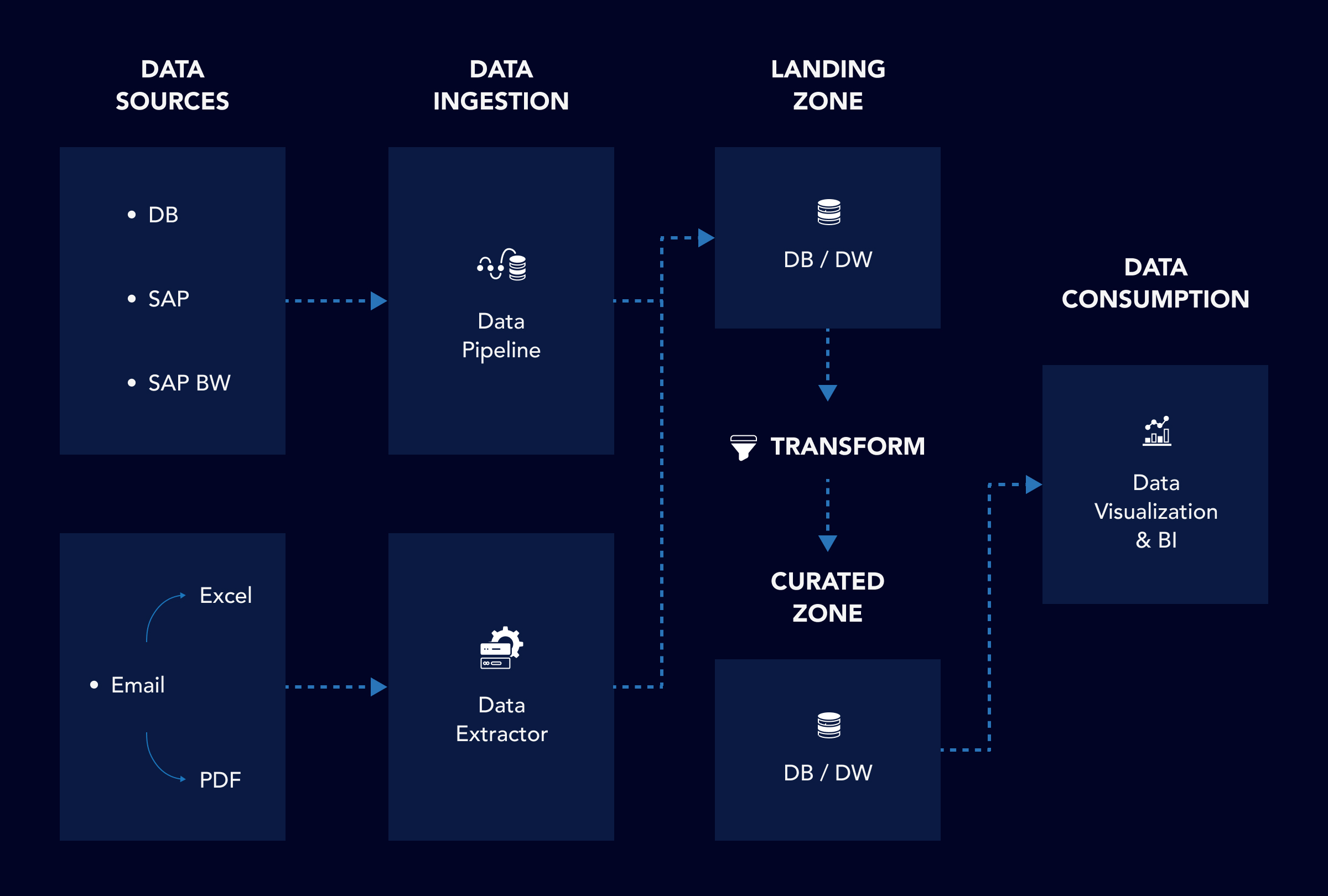
This layer significantly reduced errors, ensured consistency, and enabled real-time adaptability to planning inputs.
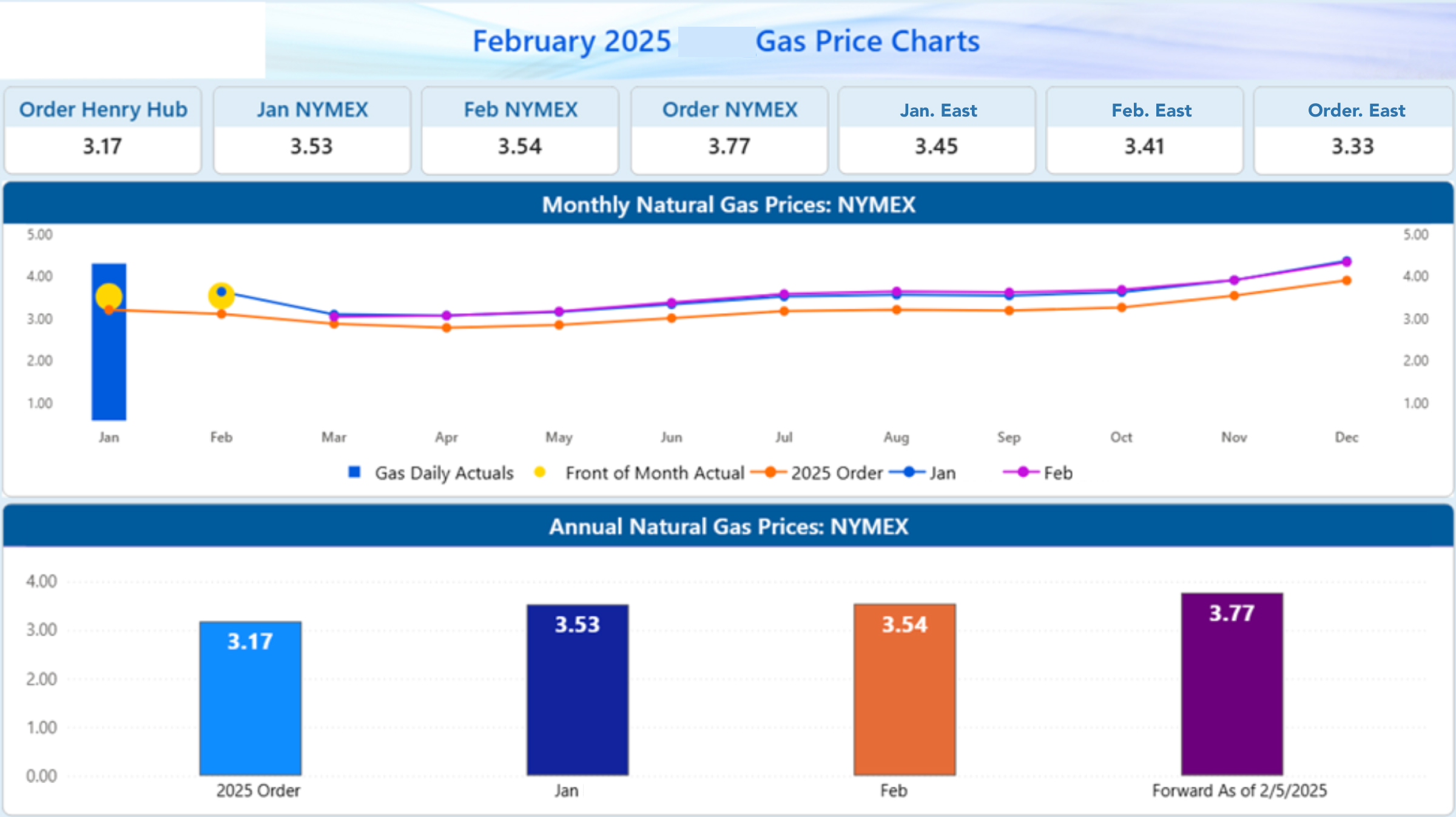
By replacing spreadsheet chains with a centralized application, teams could now collaborate dynamically through a shared interface that both informed and empowered decision-making.


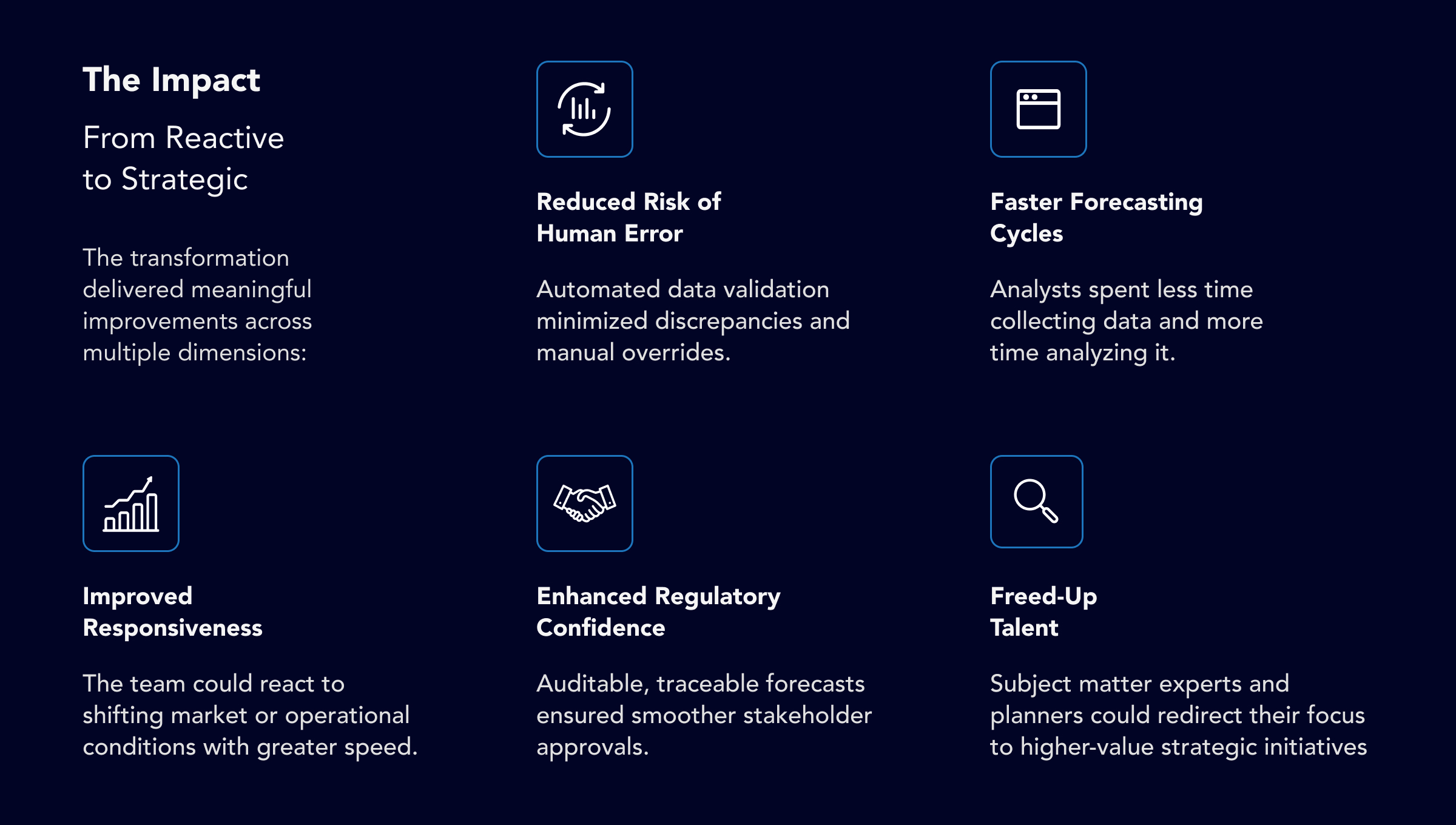
The transformation delivered meaningful improvements across multiple dimensions:
This transformation wasn’t about replacing people, it was about respecting the deep expertise within the utility and equipping teams the tools to do their jobs more effectively. At every step, automation was designed around the real-world workflows of analysts, engineers, and regulators.
Driving this change were internal technology champions, individuals who understood both the complexity of the work and the potential automation could unlock. Among them was a visionary leader who brought Aligned Automation into the conversation. By championing a smarter, more connected approach to forecasting, this stakeholder helped move the organization from concept to pilot, ensuring the solution was grounded in operational reality, not theoretical promise. Their leadership bridged strategy and execution, laying the groundwork for a scalable, sustainable transformation.
The challenge was never a lack of capability; it was a matter of bandwidth. With the right tools in place, the same professionals can now lead with agility. They are still deeply involved, but their attention focused on where it matters most: identifying trends, exploring scenarios, and guiding strategic outcomes.
Rather than disrupt or override their processes, the solution elevated their work, removing friction and allowing more time for proactive planning, innovation, and collaboration.
While this case centers on a single utility group, the pattern is universal. Across the industry, utilities are grappling with similar challenges:
These issues aren’t unique, and they’re not going away. In an environment of rising scrutiny and increasing volatility, the ability to produce fast, accurate, and transparent forecasts is no longer optional. Yet most teams still spend most of their time chasing inputs, resolving discrepancies, and reconciling reports across disconnected systems.
What if your analysts could focus entirely on what they do best: evaluating scenarios, identifying risks, and shaping strategic decisions, instead of managing data bottlenecks?
That is the promise of a purpose-built, automation-enabled forecasting solution tailored to your operating environment. By reducing manual burden and integrating siloed systems, we help utilities redirect talent toward forward-looking work. The result is not just operational efficiency, but smarter planning, faster responsiveness, and stronger regulatory alignment.
With foundational automation in place, this utility group is already exploring what comes next:
The utility is also evaluating machine learning models to enhance forecast precision by learning from historical deviations, weather conditions, and real-time grid behavior. Looking further ahead, generative AI could assist in drafting stakeholder reports, simulating regulatory scenarios, or suggesting optimal contract strategies.
The journey doesn’t end with digitization - it begins there. By investing in smart infrastructure today, utilities set themselves up to be more adaptive, resilient, and forward-looking tomorrow.
Whether you are just starting your automation journey or looking to expand it, we will meet you where you are. Discover how connected systems and intelligent automation can help your utility forecast with clarity, act with confidence, and lead with resilience.



.svg)